Entre vent et eau. Un siècle d’hésitations tactiques et stratégiques 1790-1880

Michel Depeyre

Commander cet ouvrage

Table des matières

Introduction générale

I. Histoire et pensée navale

II. Les grandes phases chronologiques de la pensée navale

III. Niveaux d’une problématique

IV. Culture tactique et culture stratégique

Livre I – Vers la fin de la culture tactique (1790 – 1840)

Introduction

Chapitre Premier – À l’apogée de la marine à voiles

I. La tactique navale à la fin du xviiie siècle

A. Une tactique portée à sa perfection

B. Une pensée tactique bien structurée

II. Une continuité par delà la Révolution

A. Aux origines des livres de tactique

B. Des livres officiels

C. Les escadres d’évolutions

III. Le temps des héritiers

A. Le retour des traités

B. Truxtun recueille le savoir tactique

C. Charner ou la tradition française des études expérimentales

Chapitre II – La flotte mixte ou les hésitations de la tactique navale

I. Derniers travaux sur la tactique à voiles

A. Les premiers essais de Maissin

B. Un héritier des Lumières, Chopart

II. Réviser les fondements

A. La révolution de Paixhans

B. Les temps indécis

III. Vers une tactique à vapeur spécifique ?

A. “L’Angleterre s’égarait dans le passé…”

B. Travaux et intuitions de John Ross

Chapitre III – Des aléas de la stratégie opérationnelle aux premières ébauches théoriques

I. De l’implicite à l’explicite

A. Une stratégie pratique

B. Penser la stratégie

II. L’émergence progressive d’une approche stratégique

A. Sur la puissance maritime

B. Considérations sur la guerre navale

C. Préparer la nouvelle guerre sur mer

Livre II – Une transition matérielle et doctrinale (1840-1860)

Introduction

Chapitre Premier – Une prise de conscience

I. Une tactique mixte qui s’impose

A. Face aux transformations

B. Des distorsions entre le savoir technique et la pratique

C. La coexistence de deux tactiques

II. Une nouvelle fondation

A. Les conceptions classiques de l’amiral Bouet-Willaumez

B. 1857 ou la reconnaissance officielle de la tactique à vapeur

III. Une prise de conscience qui progresse

A. Les incertitudes anglaises

B. Un général qui s’intéresse à la mer, Sir Howard Douglas

C. Entre modernité et continuité

Chapitre II – Quand la menace vient de la mer

I. Vers une nouvelle conception du littoral

A. Epitome d’histoire de la frontière maritime

B. Des facteurs propices au changement

C. Se doter de moyens appropriés

II. La trilogie de la guerre contre la terre

A. Sur le débarquement

B. Des bombardements par mer

C. Et le blocus ?

III. La mer au cœur du dispositif stratégique

A. Signification d’une expédition lointaine

B. La Marine, un vecteur

C. Un banc d’essai pour les innovations

D. Une démonstration navale hors d’Europe : la chute de Canton

Chapitre III – Une pensée stratégique qui ne dit pas son nom

I. Une pensée stratégique latente

A. Les analyses stratégiques du “prince marin”

B. Les ébauches stratégiques de Reybaud

C. Les réticences de Bouet-Willaumez

D. James H. Ward

II. Éléments composants du discours stratégique

A. Une flotte, un objectif

B. Des références géographiques

C. Une dimension temporelle

III. Vers un début de formulation

A. Exhumer des principes implicites

B. Inachèvement

Livre III – Une culture stratégique (1860-1890)

Introduction

Chapitre Premier – Une tactique nouvelle à éprouver

I. Des héritages à prendre en considération

A. Des épigones de Douglas

B. Adaptation dans la continuité

C. Analyses historiques de Jurien de La Gravière

II. Tactique et technologies de pointe

A. Engouement pour une arme nouvelle

B. L’amiral Grigori Boutakov, le pionnier russe

III. Le courant cinématique s’impose

A. Des initiateurs

B. Un porte-parole, Siméon Bourgois

C. Un disciple : Penfentenyo de Kervereguin

D. Un discours d’ingénieur

Chapitre II – Une nouvelle dimension de la guerre navale

I. Un vieux rêve qui prend forme : le sous-marin

A. Une lente mise au point

B. Les travaux de Montgery

C. Vers une guerre sous-marine

II. Premières ébauches de synthèse

A. Barnes

B. Un auteur belge sur les pas de Barnes

C. Analyses d’ingénieurs

III. De nouvelles possibilités d’action

A. La guerre des côtes se diversifie

B. Des bâtiments pour une nouvelle guerre sur mer

B. Opérations fluviales et maintien de l’ordre

C. Une occasion perdue

Chapitre III – Vers une stratégie navale autonome

I. Stratégie et conditions nouvelles

A. Une technologie révolutionnaire

B. Des discours idéologiques favorables

II. Des structures favorables ?

A. Perfectionnement des institutions militaires

B. De nouveaux lieux de propositions

III. Un discours qui se structure

A. Théorie et adaptation

B. Des principes et des concepts stratégiques

C. Les prémices de théories nouvelles

D. Vers des écoles nationales ?

Conclusion générale

Sources et bibliographie

Sources

I. Sources manuscrites

A. Archives nationales

B. Archives du Service Historique de la Marine

II. Sources imprimées

A. Ouvrages de tactique

B. Autres sources thématiques

C. Presse

Grands instruments de travail

I. Outils de recherche

A. Outils bibliographiques et archivistiques

B. Annuaires navals

II. Grands dictionnaires

A. Dictionnaires généraux

B. Dictionnaires biographiques

C. Dictionnaires portant sur la période

Travaux

I. Ouvrages généraux

A. Sur la période

B. Sur la guerre

C. Sur la pensée militaire

II. Histoire maritime et navale

A. Synthèses historiques

B. Aspects techniques

C. Etudes biographiques

III. Guerres maritimes

A. Campagnes et combats principaux

B. Formes nouvelles de combat

IV. Réflexion théorique

A. Stratégie

B. Ouvrages sur la géopolitique et la géostrategie

C. Ouvrages sur la pensée navale

Index

Publié dans Uncategorized | Commentaires fermés sur Entre vent et eau. Un siècle d’hésitations tactiques et stratégiques 1790-1880

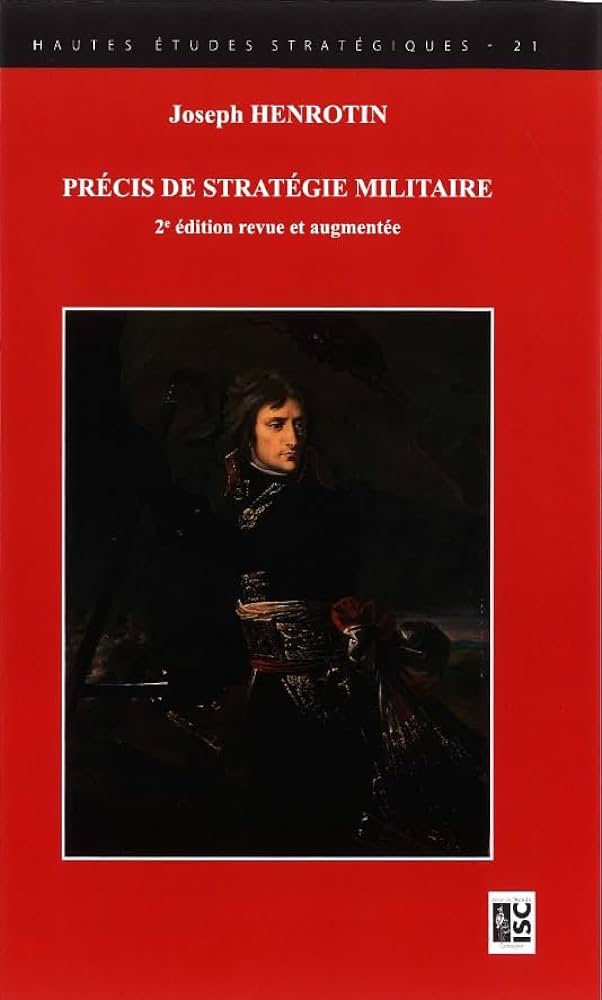
Stratégie

Antoine Grouard

Commander cet ouvrage

Table des matières

Préface

Objet – Enseignement – Éléments

L’objet de la stratégie

L’enseignement de la stratégie

Les éléments de la stratégie

Offensive et défensive

Éléments essentiels de l’offensive

Éléments essentiels de la défensive

Relations entre ces divers éléments

Multiplicité des lignes d’opération ou de retraite

Direction des lignes d’opération et des lignes de retraite

Résumé

Nouvelles observations sur l’objet et les éléments de la stratégie

I. Nécessité de préciser les définitions

II. Stratégie et tactique

III. Éléments essentiels de la stratégie

Résumé

Conclusion

Publié dans Uncategorized | Commentaires fermés sur Stratégie

Vers une politique européenne de sécurité et de défense. Défis et opportunités

Jean Klein, Patrice Buffotot et Nicole Vilboux (Dir.)

Actes du Colloque organisé les 15-16 juin 2001 par le Centre de Relations Internationales et de Stratégie (Université de Paris 1) avec le concours de l’Institut des Hautes Etudes de Défense Nationale et du Ministère des Affaires étrangères

Commander cet ouvrage

À la mémoire de Pierre Dabezies (1925-2002),
fondateur des études stratégiques à l’Université de Paris I – Sorbonne

Table des matières

Présentation du Centre de Relations Internationales et de Stratégie (CRIS)

Les auteurs

Principaux sigles utilisés

Jean Klein – Introduction – Les chances et la signification d’une politique européenne commune

Pere Vilanova – À propos de quelques variables sur le nouvel horizon stratégique

I. La dimension politique : Quelle Europe veut-on construire ?

André Brigot – Les limites géographiques et politiques de l’Europe

Franck Orban – La neutralité et ses conséquences sur la défense commune européenne

II. La dimension militaire. Quel outil militaire pour quelles missions ?

Hervé Coutau-Bégarie – Unité et diversité des cultures stratégiques en Europe

Patrice Buffotot – La redéfinition des missions, doctrines et organisations des forces armées dans l’Europe des Quinze

Bernardo Ribeiro – Le rôle de l’arme nucléaire dans la mise en œuvre d’une PECSD

III. La dimension économique

Jean-Pierre Maury – L’effort européen de défense et ses implications budgétaires

Frédéric Eyriès – L’innovation technologique et ses perspectives européennes

Claude Serfati – L’industrie aérospatiale européenne : un exemple d’integration ?

IV. La mise en œuvre d’une stratégie d’inter­vention autonome

Henri Burgelin – Introduction

David Hanley – Le conflit du Kosovo : leçons tirées par les Alliés

Michèle Bacot-Decriaud – Les réformes institutionnelles et la capacité de l’Europe à gérer les crises

André Dumoulin – La force de réaction rapide euro­péenne et son articulation avec l’OTAN

Nicole Vilboux – Le débat sur la PESD aux États-Unis

Index des auteurs cités

Index thématique

Publié dans Uncategorized | Commentaires fermés sur Vers une politique européenne de sécurité et de défense. Défis et opportunités

Chapter Nine. A Memorial Remembered


On June 17, 2001, the Lafayette Escadrille Memorial was teeming with hundreds of people.  On this bright, beautiful day, the vividly festive scene was a busy one full of chatter, activity, and fanfare.  The usually empty grounds of the Memorial were filled with a large assortment of visitors: American, French, dignitaries, tourists, military personnel, and civilian attendees. 1

This was a special day for the Lafayette Escadrille Memorial.  Over forty American Congressmen and Senators, and a large gathering of French and American businessmen, had descended upon the Memorial to witness a special wreath laying ceremony and military flyover in celebration of the 85th Anniversary of the Lafayette Escadrille. 

Why all this attention 85 years after their inauguration? How did the Lafayette Escadrille Memorial become so crowded on this day, just years after such attempted ceremonies consisted of “just three people and a bugler?”

* * *

A few years ago, a U. S. Air Force Lieutenant General named Michael Moseley was taken to the Lafayette Escadrille Memorial while on a visit to France.  Taken by its beauty and its historical significance, he was appalled by its condition.  General Moseley could not believe that an important symbol of such a storied American unit had fallen into such disrepair and decided to take action.  He made it his personal mission to do something about the monument in order to restore the honor of the men it represented.  Under his impetus, and through the efforts of others, the Memorial would finally get some much-needed attention. 2

The events that were transpiring on this day of June 17, 2001, were a testimony of the General’s efforts.  On this particular day, however, General Gregory S. Martin, the USAF Europe Commander, was the military guest of honor, and in charge of the festivities designed to promote the honor of the Lafayette men.  His speech echoed General Moseley’s sentiments,

“Frankly, the condition of the monument does not meet the standards expected.  These airmen deserve our respect and care.  The problem is, as time marches on, the trust funds and the people who are conversant with the sacrifice, begin to disappear.  We are finding that out with the Lafayette Escadrille Memorial.” 3

Continuing, General Martin’s speech captured the essence of the Lafayette men and their importance to the USAF,

 “These men were our pioneers.  They were not just the forerunners of the Army Air Corps of World War II, but of the Air Force today.  This is where America first learned to fly aerial combat; they gave us our aviation war wings.  The bottom line is, we want the people who visit the Lafayette Escadrille Memorial to feel just as proud about the contributions of the airmen that rest here as they do about the contributions of those who rest back in the States.”  

The speech and the day’s celebrations were a success.  The ceremonies included a flyby of French and American aircraft, and an organized visit of the Memorial and its crypt for the Congressmen and Senators.  These efforts generated much interest.  The French Government subsequently raised $485,000 as a donation to the Lafayette Escadrille Foundation. 5 The American Legion, a volunteer veteran’s group from America, has pitched in an additional $25, 000. 6

But more importantly, the results of the June 17, ceremony proved to be a catalyst to American Government.  Congressman Russell Stearns from Florida, led the charge in Congress, and promoted the bill and legislation necessary to raise funds for the Escadrille Memorial.  He introduced legislation on September 19, 2001, to furnish the Lafayette Escadrille Memorial with $2 million in funds.  In detailed testimony to the members of Congress, Congressman Stearns talked about the Lafayette Escadrille men, telling their history while displaying pictures of the men.  He recounted the history of the Memorial, to include its problems over the years, and he presented actual photos of the damage to the crypt and to the Memorial itself.  In December of 2001, Congress approved the legislation and $2 million dollars were earmarked for the Memorial.  The legislation included the following house comments,

“It is the sense of Congress of the United States that it should continue to honor the U. S. aviators who lost their lives while flying for France during World War I by guaranteeing support funds to repair the Lafayette Escadrille Memorial in Marnes-la-Coquette, France.” 7 

This appropriation proved fundamental to the survival of the Memorial, since repairs were estimated to cost $2 million dollars (after the $485,000 pledge from the French).  One million will go to the restoration of the Memorial, and another million will go to replenishing the dwindling trust fund to maintain the Memorial and its grounds. 8

A promotional campaign for the Lafayette Escadrille Memorial has been started by the USAF.  Posters and brochures furnished by the Air Force History and Museum Program promote the refurbishment of the monument.  In a section of the brochure entitled “Keeping Faith with America’s Aviators: The International Effort to restore the Memorial,” it states that “restoring the Memorial to its full grandeur would be a fitting tribute to America’s first combat men.” 9

* * *

What exactly is planned for the Lafayette Escadrille Memorial? According to the  “Preconditions Study to the General Restoration” laid out in February 1999, by Pierre Antoine Gaiter, Chief Architect of Historic Monuments, Ministry of the Culture of the French Government, who will be the chief architect in charge of redesign, the restoration calls for three stages of repairs. 

Stage One: Waterproof the crypt, fix drains, restore and waterproof terrace and roof, make structural repairs to the crypt and double glass the stained glassed windows.

Stage Two: Restore and clean façade, cleaning and removal of deposits behind coffins in crypt, restoration of stucco to crypt.

Stage Three: Redo pavements, grade grounds and landscape. 10

In summary, the following reparations and repairs are necessary to improve the condition of the memorial:

n      Perform a hydrographic survey of the surrounding site and develop a ground water monitoring plan.

n      Reroute and canalize the adjacent stream.

n      Install a cutoff drain and impermeable wall upstream to prevent groundwater contact with the structure.

n      Analyze ground and rainwater quality to determine how it impacts the rate of deterioration of concrete and steel bars and develop methods to slow rate of deterioration.

n      Investigate the impact of lowering the ground water level especially as it may impact the specific hydrostatic conditions to which the foundation of the structure is subject.

n      Further investigate the structure integrity of the entire structure and especially the foundation.

n      Repair or replace pavements.

n      Landscape the grounds, repair the ground walkways, and plant desired trees and shrubbery to improve the look and well-being of the site. 11

A Reinvigorated Foundation

The Lafayette Escadrille Foundation has its headquarters at 34, avenue de New York, in the 16th Arrondissement in Paris.  The Foundation, in response to all of these recent goings-on, has appeared to experience a rebirth in spirit and life.  Mr. Russell Porter, the American Foundation President, and a colorful gentleman who appears to have stepped directly out of the 1920’s or 1930’s, is beside himself with happiness at the infusion of cash and renewed interest and support.  For over thirty years he has struggled to bring the attention due to the Lafayette men; he is overjoyed to see the renewed interest.  Also ecstatic is Colonel Jean P. Gillet, a dashing suave French man with a gravelly voice who is the French President of the Foundation and a former commander of the 2/4 Lafayette Escadrille.  His voice trembles with excitement at the thought of the planned reconstruction.  Meetings of the Foundation are lively and a renewed spirit is tangible and a sense of action accompanies this new found enthusiasm. 12 The Foundation is currently constructing its own Internet website, something that has not existed up till now.  The site will draw attention not only to the Memorial, but will serve as an educational site as well, containing biographical and historical information about the men and the unit.  A new promotional video has been filmed, and will be available on the website.  The multimedia approach brings the Foundation to the modern age, and it is hoped that it will entice and excite youth from both France and the United States about the Lafayette Escadrille. 13

General William Lescynski, the distinguished American gentleman currently in charge of the American Battle Monuments Commission, European Region, is also impressed by the recent efforts to support the Lafayette Escadrille Memorial.  He states there are over 700 monuments, memorial and plaques — of which 170 are privately funded – in France alone.  Many of these are forgotten and in disrepair.  There was a time in recent history that the ABMC was tempted to take over the Lafayette Escadrille Memorial, if necessary, since it had fallen so far into disrepair, but those days are now far behind.  Yet he knows that even though an important victory has been won, a long battle to rectify the situation remains.  The refurbishment of the Memorial will be difficult. 14

All agree however, that this is a grand start.

Resurrecting the Memory of the Lafayette Escadrille and Lafayette Flying Corps 

The author has presented the evidence that he believes has led to the Lafayette Escadrille and the Lafayette Flying Corps being forgotten over the years.  To speak on behalf of the American national psyche is nearly impossible, the author can only do his best to explain why he thinks the nation has not remembered the Lafayette Escadrille and why the unit has not resonated with American culture like other volunteer units have.  There are those who will argue that the unit has not been forgotten; indeed, the author ran into those contrary to his opinion.  But the majority of the people with whom the author came in contact, agreed that something was amiss.  Many librarians, researchers, and historians were intrigued by the premise. 

The evidence printed here can be summarized as follows.  The Lafayette Escadrille’s total number of victories was not outstanding by any measure; the record of 40 kills in 23 months of fighting, was eclipsed by many contemporary French, American and British units.  Furthermore, take away the monumental efforts by Lufbery and the unit’s record pales even further.  The total number of victories by the Lafayette Flying Corps, 199, was not a great amount either when it is compared to the overall victory total claimed by the Allies. 

The USAS completely failed to integrate the Lafayette Escadrille into its ranks.  The abrupt dispersal of the unit and its men, and the complete failure to carry on its history did more to damage the unit’s legacy then any other single act. 

To add to the pains of the disbanded unit, the discord, dissension, and distrust among its members, soured the Lafayette Escadrille’s men, and these men would fail to carry forward the unit’s legacy in the post war period, failed to carry on its traditions until too late, and did little to bolster and defend the unit’s name.  Though books were written and a movie made, other forces, like the “ringers,” detracted from the Lafayette’s glory and ruined its image.  None of its members went onto experience the fame of an Eddie Rickenbacker, a Billy Mitchell, or Teddy Roosevelt.  Without key household names, the men’s beacon dimmed.

The USAF also has failed to keep alive the spirit of the Lafayette Escadrille.  The squadron lineage has died off.   No monuments exist stateside to celebrate and honor the men.  There is no central collection of Lafayette memorabilia, nor are there any museums dedicated to their cause.  Its greatest ace and hero, Lufbery, has no marker, monument, or memorial anywhere in the States.  

All of these factors contributed to the Lafayette aviators’ fall into oblivion.   

* * *

The renewed interest displayed by the U. S. Government and the USAF in the fate of the Lafayette Escadrille is promising.  The important first step, to restore the Lafayette Escadrille Memorial to its former glory, has been undertaken.  An aggressive promotional campaign by the USAF in the United States is necessary to correctly memorialize the men.   

And it is never too late for the USAF to once and for all accept the Lafayette aviators as the true pioneers of American combat aviation.  Their history should be officially and carefully documented, and a single location dedicated to their memory should be established in the United States, where all can come to learn and pay tribute to these great men.  As Paul Rockwell once said, “I think that the youth of our country (America) could get a great deal of inspiration out of the study of the Lafayette Escadrille.” 15 The Lafayette men were unable to safeguard their legacy while alive.  Now that they are dead it is up to America to never let their story die.              

1.      Participation d’auteur.

2.      Entrevue avec l’Etat-major du Général le 16 mai 2001.

3.      Air Force Times, 17 juin 01.

4.      Ibid.

5.      Air Force Times, 18 juin 01.

6.      Site d’Internet de l’ « American Legion ».

7.      “Restoring the Lafayette Escadrille Memorial.” House Resolution 3004, 6 December 2001. 

8.      Budak, David, USAF Lafayette Escadrille Memorial Assessment Point Paper, 2001 

9.      Air Force History and Museums Program Brochure, 2001.

10.   Budak, USAF Assessment Point Paper.

11.  Ibid.

12.  L’auteur a été invite aux plusieurs réunions de la Fondation du Mémorial de l’Escadrille Lafayette.

13.  L’auteur a eu la chance de regarder le vidéo de la Fondation.  Il a aussi vu le site Internet proposé.

14.  Entrevue avec le Général.

15.  Rockwell, Interview : Paul Rockwell, p. 2.   

Publié dans Uncategorized | Commentaires fermés sur Chapter Nine. A Memorial Remembered

Chapter Eight. America’s Failure to Commemorate the Lafayette Aviators

Despite the fact that the Lafayette Escadrille and the Lafayette Flying Corps’ men were America’s first combat aviators, the USAF’s and American history have negligently ignored them.  As Charles Dolan put it, “The Lafayette Flying Corps, including the Lafayette Escadrille N-124, was and is the beginning and the backbone of the USAF, and not one word of its wonderful contribution exists.” 1 The Lafayette’s history was lost over time, and the lack of available USAF history on the subject has hampered the remembrance of America’s famed aviators.  To add to Charles Dolan’s sentiment, Lieutenant Colonel Bruce Freeman of the USAF, who studied the problem of the lack of the Escadrille’s lineage, adds, “More importantly, the first American fighter squadron ever committed to combat no longer exists!” 2

Although the first statement by Charles Dolan is only partially true, the latter statement is completely correct.  How can it be that America’s first combat aviators have not been properly held up for recognition and as examples for the rest of the USAF? In this author’s research through the aviation collections, research centers, and museums that exist in the United States, he came to a definite conclusion – none of the Lafayette Escadrille material is centrally located or sorted, and no organization has attempted to mass and gather the existing Lafayette material to one locale in order to tell the Lafayette’s story to the American public. 

The Lafayette Escadrille and the USAS History of World War I 

Serious attempts were made by the USAS during and after World War I to appropriately document the official history of its units and history.  “General Order Number 31,” from General Headquarters, AEF, dated February 16, 1918, “required all major subordinate AEF organizations to establish and supervise a historical section that would collect data and keep a war diary.” The Chief of Staff of the Air Service sent telegrams on November 19, 1918, to every Air Service Organization, directing each to prepare a history and to forward it to the Information Sections. But as Colonel Edgar S. Gorrell, the AEF Assistant Chief of Staff and the man appointed to oversee the official history of the USAS, noted, “the Zone of Action has no further interest in the war – getting home was their main priority.  Writing history does not appeal to them.” 3

The Lafayette Escadrille was officially reconstituted as the 103rd Aero Pursuit Squadron, and though the number of the unit had changed, the “Screaming Sioux Warrior” was still used as the unit insignia.  Historical responsibility of the Lafayette Escadrille transferred to the 103rd as well; it was responsible for the unit’s history. 

The 103rd did include the Lafayette Escadrille history as part of its own, but understandably the unit was more interested with its own exploits and contributions to the war effort and this is readily apparent in a review of the 103rd squadron history. 4 Fortunately for those interested, the Journale des marches et operations, Escadrille 124, Volumes One and Two, exist to this day in good condition at the National Air and Space Museum, and are available for private viewing.  These were kept and updated by squadron members and certified by Thenault, and although the log starts in late August 1916, it is complete through February 1918.  Besides this, no official history was kept during the war.  The Journale reads like a daily flight log, so it does not cover in detail all of the squadron’s activities.  Understandably, the unit was in combat operations and it is fortunate that Thenault decided to keep any log at all. 5

After the war, the 103rd was consolidated with the 94th Aero Pursuit Squadron in 1924.  The 94th is still an active duty USAF unit flying in the USAF’s 1st Fighter Wing based at Langley, Virginia. Technically, the lineage of the Escadrille had passed on to the 94th Aero Pursuit Squadron. 6

Per war department Circular 25, dated April 8, 1924, “the 103rd Aero Squadron was reconstituted and consolidated into, and as part of the 94th Aero Pursuit Squadron.” 7 According to the Air Force Historical Research Agency (AFHRA) at Maxwell Air Force Base, in a letter to Lieutenant Colonel Bruce Freeman, the “history and honors of the 103rd Aero Pursuit Squadron, and thus the Lafayette Escadrille, are perpetuated by the 94th Tactical Fighter Squadron (TFS). 8

Yet according to researchers familiar with the subject, this had not been done.  The 94th TFS has not integrated its history with the 103rd.  First of all, the “Hat in the Ring” symbol used by the 94th was originally a personal insignia used by James Norman Hall of the Lafayette Escadrille, a full year before the 94th APS would adopt this insignia.  Then, on the subject of victories, an official unit history was released in 1976 at Langley Air Force Base, Virginia, claiming that ‘the 94th “Hat in the Ring” Squadron scored the first air superiority victory in the history of the USAF.” 9 But the 103rd already had seven confirmed “all –American” kills as well as twelve “probables” between February 18, 1918, and two months later when the 94th claimed its first kill.  The 40 American kills achieved by the N-124 are not mentioned either. 10

Talks and efforts to reestablish the 103rd in honor of the Lafayette Escadrille have met with no success.  The USAF has offered an official explanation in a document entitled “Explanation as to why the 103rd cannot be Resuscitated.” Namely, that it is nearly impossible to bring back a unit once it has been decommissioned; indeed there are no precedents to do so.  Also, the 103rd designation falls into a numbering system dedicated to the Air Mobility Command and the National Guard system; there is a unit that currently carries the 103-designation.  In brief, the USAF has no interest in resurrecting the 103rd. 11

But where did the Lafayette Escadrille fit into the USAS’s picture of World War I history as a whole? In The U. S. Air Service in World War I, which was completed by USAS historians and produced in four volumes, the Lafayette Escadrille is only mentioned on four occasions in a series that span 2,319 pages.  The few references are at least favorable, to include the following,

“When the Lafayette escadrille was called to help as in 94th and 95th Aero Pursuit Squadrons it worked very well.  The work was greatly appreciated, and the Lafayette Escadrille, who had experienced men, were assigned to new squadrons.  The presence of the pilots at the front, accounted greatly in taking the other pilots across the big transition from school flying to fighting.” 12 

The other references mention the Lafayette Escadrille in passing, and there is only one paragraph of eight lines dedicated to the Lafayette Escadrille’s transition to the 103rd. 13 Nothing is noted of the Lafayette Escadrille’s wartime accomplishments.  The lack of references to the unit is astounding, considering that the unit had been in continuous combat for close to 23 months – the USAS’s next longest squadron in continuous combat in World War I was the 103rd, which fought for nine months. 

Gorrell’s History of the American Expeditionary Forces Air Service, 1917-1919, which is maintained by the U. S. National Archives, has a slightly more extensive coverage of the Lafayette Escadrille.  The short unit history it uses was written by Major Dr. Edmund Gros USAS, who although writing a balanced, apt history, neglects to go into details and tells the story more from an administrator’s point of view (which he was) than from a pilot’s point of view. Gorrell’s history does not contain an official unit record of accomplishments, nor does it go into great detail.  Furthermore, only 27 pages are dedicated to the Lafayette Escadrille in a series that contains 282 bound volumes of tens of thousands of pages. 14

No Home for the Lafayette Men in the United States 

There are no exclusive monuments in the United States dedicated to the Lafayette Escadrille or the Lafayette Flying Corps.  There are several statues, monuments, and plaques dedicated to individual members of the Escadrille or the Corps, but all of them except for one exception, were locally funded and supported.  None of these are dedicated as a direct result of the U. S. Government or the USAF.

The existing monuments erected in the memory of the individuals of the Lafayette Escadrille are few and scattered.  Kiffin Yates Rockwell has a few monuments and plaques erected in his memory.  At Lee’s Chapel in Lexington, Virginia, there is a plaque dedicated to Kiffin on the wall.  There also exists a North Carolina State Historical Marker at the corner of Merrimen Avenue and Hillside Street in Ashburn, North Carolina, honoring Kiffin and his home. 15

Of course, Kiffin’s rival in the Escadrille, Norman Prince, is buried and memorialized at the National Cathedral in Washington, D. C.  James Rogers McConnell and Andrew Courtney Campbell are honored well at the University of Virginia, in Charlottesville, Virginia.  McConnell has a street named after him, has a statue in the form of Icarus erected to him on the grounds, and has a plaque in his honor in the school chapel.  Campbell also has a plaque dedicated to him and a building in his honor. 16 There is also an obelisk erected in McConnell’s memoriam in his hometown of Carthage, North Carolina. 17 The rest of the small plaques and monuments erected to individual members remain similarly dispersed and obscure. 

A plaque exists at the USAF Academy Football Stadium in Colorado Springs, Colorado, dedicated to the pilots who died for France in 1914-1918, but no men are mentioned individually.  To this author’s knowledge there are no other officially U. S. Government sponsored monuments or plaques. 18

These scattered monuments do not honor the unit and they do nothing to promote the unit’s history.  To illustrate the point, the author stood outside of the University of Virginia Alderman Library, where the Icarus-shaped statue to James Rogers McConnell, stands prominently, and surveyed 100 students on the identity of the monument and whom it was erected to.  Out of the 100 surveyed, only 25 students knew whom the statue represented, and the majority of this 25 were graduate students who either worked at the library or did research regularly at the library.  Only two undergraduate students knew that it was dedicated to James Rogers McConnell.  Only a fraction of the 25 knew what the Lafayette Escadrille was (five).  To make sure that this was not just an isolated incident, the author went back through University of Virginia student campus publications and discovered that in the past decades, there were movements aboard campus to have the statue completely removed from grounds due to its reputed ugliness.  It took editorials and research from other students to remind the statue-haters that it represented one of their famous own, and that it was a memorial to a fallen war hero.  The students who wanted the statue removed had not known that, and they subsequently backed down. 19

There exists no monument dedicated to the Escadrille’s great ace – Lufbery.  There is no marker for his birthplace.  No flying fields are named after him, no statues are erected to him.  The only thing that keeps his name and record alive are the history books that speak of him. 20 

No museum in the Unites States has a dedicated exhibit in honor to the Lafayette Escadrille or Corps, private or public, and this includes the National Air and Space Museum.  Although there are many exhibits dedicated to early flight in America and to World War I, the American combat aviators of the Lafayette remain conspicuously absent, or are mentioned merely in passing. With no central location dedicated to their homage, with no central repository of information and knowledge of the Lafayette Escadrille and the Flying Corps, it is no surprise that the men have slipped into obscurity. 

The USAF has not done a satisfactory job of documenting the Lafayette Escadrille and Lafayette Flying Corps contributions either.  The AFHRA contains over 80 million pages in its central archives, yet the lack of primary source material and general material on the Lafayette Escadrille is surprising.  21 The USAF Museum in Dayton, Ohio, which bills itself as the “World’s Largest and Oldest Aviation Museum,” has only one museum display case dedicated to the Lafayette aviators.  Furthermore, in the Museum’s official Internet website, several of the Lafayette Escadrille’s men’s names are spelled incorrectly and there are errors in the unit history.  22                   

The USAF’s History and Museum Program’s Fiftieth Anniversary Commemorative Edition, A Concise History of the U. S. Air Force, has only two sentences dedicated to the Lafayette Escadrille.  In these two lines, the book erroneously states that Norman Prince was the founder, had five official victories, and that he transferred to the USAS, when, in fact, he was killed in combat before the USAS ever entered France.  The Concise History also lists April 14, 1918, as the first official American victory, claimed by the 94th, which denies the Lafayette Escadrille’s and 103rd’s claims. 23       

In France, the Memory Lives on 

If there is one body of people that has not forgotten the Lafayette Escadrille, it is the French.  The one-armed French General Henri Gourand captured the French sentiment in this phrase, 

“When men who have no obligation to fight, who could not possibly be criticized if they did not fight – yet nevertheless decide upon their own individual initiative to risk their lives in defense of a cause they hold dear – then we are in the presence of true heroes.” 24 

In fact, the Lafayette Escadrille still exists.  In 1920, the French designated the 7th squadron of the 35th Aviation Regiment as the re-born Lafayette Escadrille in memory of the men who came to help France in her hour of need.  The purpose was to perpetuate the name and serve as a reminder of the “best example of Franco-American friendship since the American Revolution.” 25 The unit was re-designated as the 2/5 Groupe de Chasse and served in Casablanca during Word War II, and became the most famous escadrille in the war. 26

The unit instilled some new traditions, but it always kept the insignia of the Lafayette Escadrille, the Sioux Warrior.  A review though the squadron history demonstrated in pamphlets and documents shows that the French pilots have done their best to keep alive an American “cowboy” spirit by instituting rites and passages involving Sioux and Indian dress. 27

The unit holds reunions every year to commemorate the Lafayette traditions and all former members are invited to attend.  The surviving members, while they were alive, were often invited, Charles Dolan was the last survivor to attend. 28

The memory of the dead is not forgotten either.  There is a plaque to Kiffin Yates Rockwell which marks where he fell in the French countryside. 29 In the town of Luxeuil there is also a special plaque next to his grave in the town cemetery.  In Luxeuil’s town square, there is a plaque dedicated to all of the men of the Lafayette Escadrille, thanking them for their contribution to France.   And there is a plaque on one of the sides of the hotels, denoting where the men used to stay. 30 And there is a plaque and unit memorabilia at the Luxeuil air base where the current Lafayette Escadrille was based. 31

There is a monument erected in memory of James Rogers McConnell in Fleury-le-martel where he fell, which was dedicated on June 24, 2000. 32 Ronald Hoskier has a square named after him in D’Etalon. 33 Many of the men are honored in the Pantheon, a celebrated hall of fame of France’s immortal heroes.  Here the visitor can see the name of the men who fell for France and who were awarded the Legion of Honor: Charles J. Biddle, Victor Campbell, Raoul Lufbery, Norman Prince, David Putnam, Kiffin Rockwell, Robert Soubiran, and William Thaw are some of the men listed in this special sanctuary. 34

France was also quick to recognize the Lafayette aviators’ efforts during the war.  Marshall Petain gave the Lafayette Escadrille two unit citations, the first on August 17, 1917, and the second on October 22, 1918. 35 The unit was also awarded the fourragere of the Croix de Guerre, which was only awarded to 26 units during the war. 36 A special brevet was authorized and given to the Lafayette Flying Corps pilots by the Minister of War in 1918. 37 Marshall Foch awarded the aviators another citation November 7, 1919. 38 

The American Government has never officially recognized the Lafayette Escadrille or the Lafayette Flying Corps with a special citation or award.

* * *

That France remembers the Lafayette aviators better than the Americans speaks volumes about the Lafayette’s state of affairs in America.   One could perhaps say that the French have more reason to thank the American aviators.  But the truth is that America has failed to commemorate the Lafayette men.  


  1. Lettre, date 19 septembre 1970, Charles Dolan à M. Q. Beam.  Charles Dolan Collection.
  2. Freeman, Bruce M., The Lafayette Escadrille: Preserving her Heritage (University of Nebraska, 2000), p. 2.
  3. Gorrell, Edgar S., Gorrell’s History of the AEF Air Service (USAF Information Circular, 1921), p. 2. 
  4. 103rd Aero Pursuit Squadron Logbook.
  5. Journal: Escadrille N° 124.
  6. Freeman, The Lafayette Escadrille.
  7. Ibid.
  8. Ibid.
  9. Ibid.
  10. Ibid.
  11. Ibid.
  12. The USAS in World War I, Vol. I, p. 285.
  13. Ibid., p. 288.
  14. Gorrell’s History.
  15. Rockwell, Interview: Paul Rockwell, p. 27.
  16. Visite d’auteur.
  17. Archives du NASM, Smithsonian Institution.
  18. Lettre, date juin 1963, de Austen Crehore.  Austen Crehore Collection.
  19. The Cavalier Daily, date 2 novemmbre 1995, et The University Journal, date 10 novembre 1982.
  20. Flammer, The Vivid Air, p. 187.
  21. Air Force History and Museums Programs Brochure, 2001.
  22. Visite d’auteur.
  23. McFarland, Stephen L., A Concise History of the U. S. Air Force (Air Force History and Museums Program, 1997), p. 7.
  24. Mason, Lafayette Escadrille, p. 105.
  25. Flammer, Vivid Air, p. 198.
  26. Entrevue avec M. Jean Gisclon.
  27. Publication de l’Escadrille Lafayette 2/5.
  28. Entrevue avec M. Gisclon.
  29. Flying for France vidéo.
  30. Visite d’auteur.
  31. Ibid.
  32. James R. McConnell Collection.
  33. Gordon, The Lafayette Flying Corps, P. 138.
  34. La Cohorte, N° 99 et visite du Pantheon par l’auteur.
  35. Parsons, I Flew, p. 296.
  36. Ibid., p. 314.
  37. Gros, A Brief History, p. 17.
  38. Battle Creek Airshow brochure, Charles Dolan Collection.
Publié dans Uncategorized | Commentaires fermés sur Chapter Eight. America’s Failure to Commemorate the Lafayette Aviators